Most retail businesses don’t fail because of poor sales. They fail because of poor visibility into where the money is going. Expenses accumulate in dozens of places, supplier invoices, utility bills, staff costs, restocking runs, and without a system to capture them consistently, the picture becomes blurry fast. We built Easy Retail Flow’s expense management tools around a simple idea: tracking costs shouldn’t require a separate job. Here’s how retailers can stay on top of every expense without the paper trail.
Why Manual Expense Tracking Always Falls Behind
A receipt left on a counter. A supplier payment recorded in one system, an operational cost in another. A month-end tally that doesn’t match the bank statement.
Manual expense tracking doesn’t fail all at once. It erodes gradually, usually starting with the smallest transactions, until the gaps are too large to reconcile without significant time investment. For a single-store retailer, that might mean an afternoon lost each month. For a business managing multiple outlets, the cost is compounded across every location.
The core problem is that manual systems require discipline to maintain but don’t reward that discipline with anything useful in return. A spreadsheet tells you what you entered. It doesn’t surface patterns, flag anomalies, or integrate with the sales side of the business.
Categorize First, Analyze Later
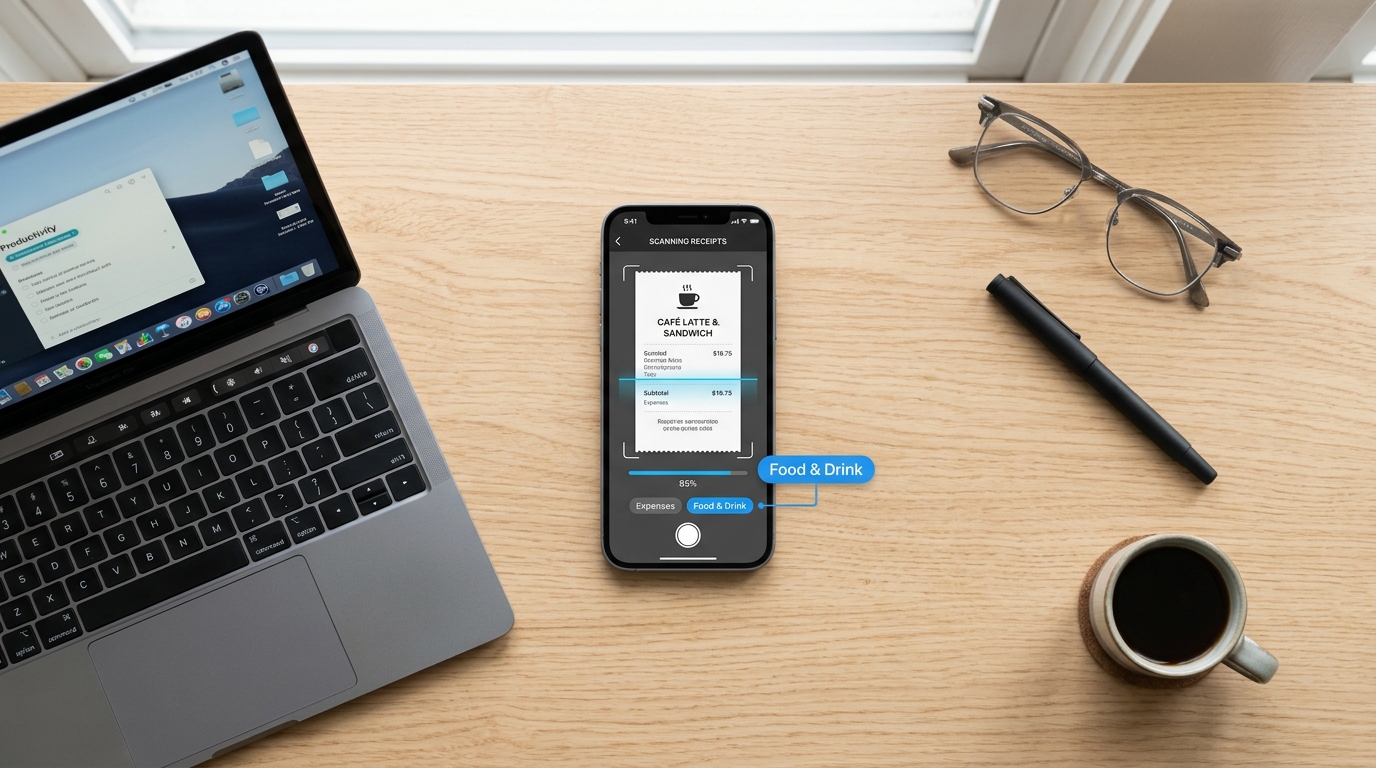
The most practical shift a retailer can make is moving from flat expense records to categorized ones.
When expenses are grouped by type, recurring costs, one-time purchases, operational overheads, restocking, the data starts to tell a story. Month-on-month comparisons become meaningful. Budget decisions are grounded in actual numbers rather than estimates.
- Record expenses under custom categories that reflect how your business actually operates
- Separate recurring costs from one-time expenditures from the start
- Monitor daily, weekly, and monthly expense totals within each category
- Use category-level trends to identify where costs are climbing before they become a problem
Understanding how expense categorization fits within a complete invoicing and financial management system is what separates reactive cost management from proactive planning.
The labels matter less than the consistency. Whatever categories are set up, using them reliably from the first entry forward is what makes the data valuable over time.
Connecting Expenses to the Full Financial Picture
Expenses don’t exist in isolation. A restocking cost connects directly to stock levels. A supplier payment ties to an outstanding order. An operational overhead affects profit margins on every sale made that week.
Retailers who track expenses in a silo, separate from sales data, inventory movement, and payment records, are working with an incomplete view of their own business. The insight they need exists somewhere in the data, but it requires manual assembly to surface it.
When expense records sit within the same system as sales history and payment tracking, profitability analysis becomes straightforward. Comparing what came in against what went out, by store, by period, or by product category, no longer requires pulling numbers from multiple places.
This is also where the relationship between billing and cost control becomes visible. The way transactions are captured at the point of sale has a direct effect on how accurately expenses can be tracked and reported downstream.
Recurring Costs Deserve Their Own Attention
One-time expenses are easy to remember. It’s the recurring ones, monthly software subscriptions, regular supplier orders, lease payments, staff costs, that quietly shape the financial health of a retail business without drawing attention.
Treating recurring and one-time costs as the same category is a common oversight. The analysis they require is different.
- Flag recurring expenses separately so they appear in budget forecasting
- Monitor whether recurring costs are stable, rising, or being duplicated across outlets
- Use recurring cost data to set realistic monthly baselines
- Identify costs that recur without clear business justification
Retailers running more than one location need this visibility even more, since a recurring expense at each outlet multiplies quickly across the portfolio.
When the Numbers Work for You
The end goal of expense tracking isn’t compliance or record-keeping for its own sake. It’s having numbers that work for the business rather than against it.
When expense data is clean, categorized, and integrated with the broader financial picture, it becomes a decision-making tool. Restocking budgets can be set with confidence. Profit margins can be assessed accurately. Supplier negotiations can be approached with real cost data in hand.
The full picture of retail financial management, from invoicing to expense visibility, is what makes these decisions reliable rather than approximate.
We designed Easy Retail Flow’s expense tracking and reporting tools to give retailers exactly that: organized, accessible cost data that sits alongside sales reports and payment histories in one place. Whether you’re managing a single store or several outlets, the numbers should always be within reach, and they should always be telling the truth.
Easy Retail Flow’s Invoicing and Expense Management feature lets retailers record, categorize, and analyze expenses in real time, fully integrated with sales reports and financial analytics across one or multiple stores.