How a Modern POS System Speeds Up Checkout
Checkout is where your retail business wins or loses the customer experience. A few extra seconds per transaction, a miskeyed price, a payment method that isn’t supported, a staff member manually cross-checking stock — these small friction points compound into long queues, frustrated customers, and lost sales. We built Easy Retail Flow around one core understanding: the checkout counter should be the smoothest part of your customer’s day. Understanding how all these moving parts connect is the foundation of any well-run retail store
Modern POS systems have moved far beyond the cash register. They are now the operational nerve centre of a retail business, connecting sales, stock, staff, and reporting in real time. Here is what that actually looks like in practice.
The Intuitive Interface That Keeps Lines Moving
Speed at checkout begins before a single item is scanned. It starts with how the POS interface is designed.
A well-built POS system presents only what the cashier needs, in the order they need it. Product search, customer selection, and payment are structured to flow in one direction without detours. When a returning customer walks up, their profile surfaces instantly. When a walk-in arrives, no registration step slows the line.
The best interfaces are designed for real-world retail, not controlled demos. That means handling a busy Saturday rush with the same ease as a slow Tuesday afternoon, without extra clicks, extra screens, or extra training time for new staff.
Flexible Discounts and Tax Handling Without the Delay
One of the most underestimated causes of checkout slowdowns is pricing exceptions.
A customer presents a coupon. A product is on promotion. A corporate buyer expects a different tax treatment. Without a system built to handle these on the fly, staff have to override, call a manager, or void and restart the transaction entirely.
A modern POS solves this at the system level, not the workaround level:
Apply discounts product-by-product or across the entire cart
Set tax rules at the product or cart level independently
Hold an active transaction and return to it without losing data
Review and verify recent transactions instantly without digging through records
The result is a checkout that bends to your pricing rules rather than forcing customers to wait while staff figure out exceptions.
Payment Flexibility and Transaction Confidence
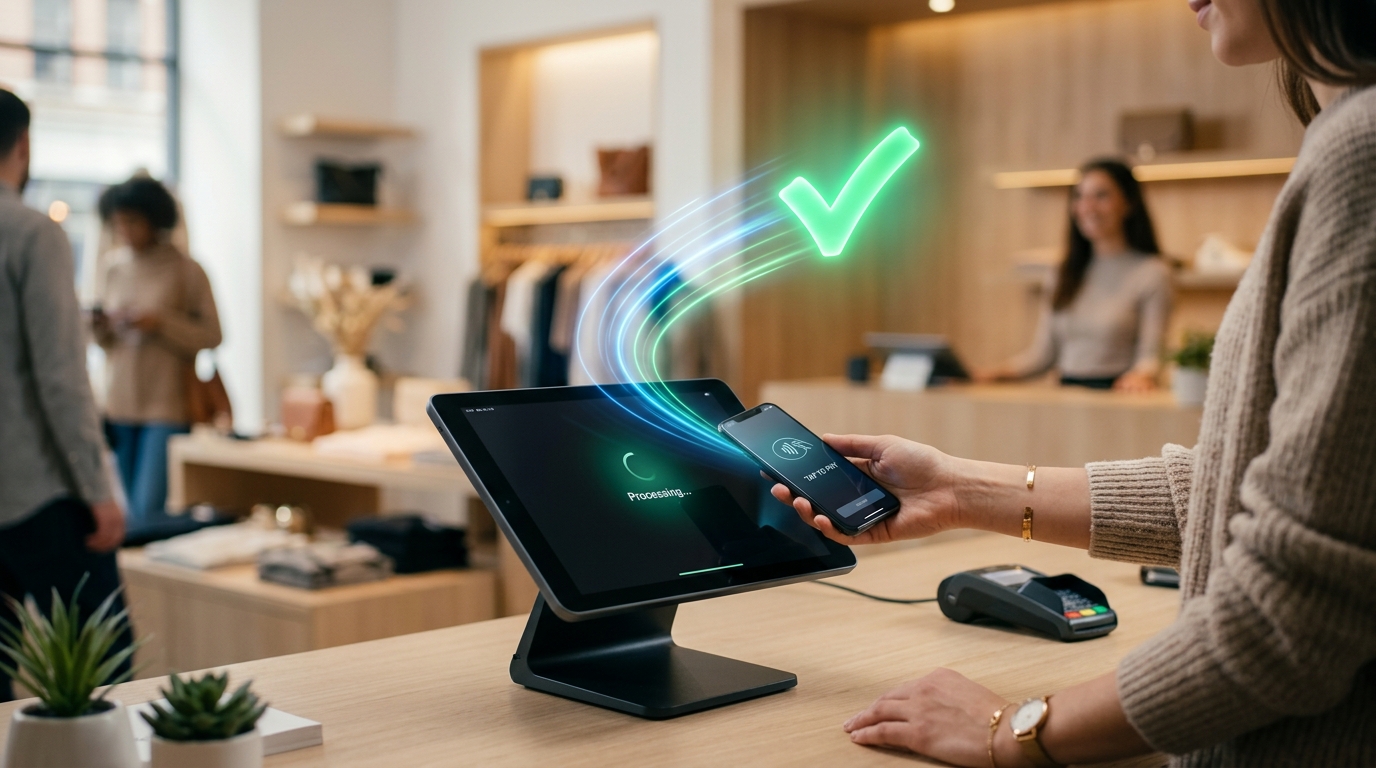
Retail payment expectations have shifted significantly. Customers expect to pay how they choose, and a POS that limits payment methods creates a direct conversion barrier.
Modern systems support multiple payment types within a single transaction flow, keeping the process fast regardless of how the customer chooses to pay. Just as critical is the visibility that follows each sale. Staff can view recent transaction histories immediately, which matters when a customer disputes a charge, requests a receipt reprint, or asks whether a payment went through.
This kind of instant verification is not just convenient — it removes a category of post-checkout issues that waste time and erode trust. The way this data is stored and accessed also depends on where your POS system lives
Real-Time Inventory That Prevents Mid-Sale Surprises
Nothing derails a checkout interaction faster than discovering, at the point of sale, that an item is actually out of stock.
A POS system that connects directly to live inventory eliminates this scenario. Stock levels update the moment a sale is processed, meaning what the system shows reflects what is actually on the shelf. Low stock notifications flag products before they run out rather than after a customer has already been turned away.
Consider what this means in practice:
Cashiers confirm availability without leaving the POS screen
Stock adjustments require an approval workflow, preventing unauthorized or accidental changes
Products can be assigned across multiple stores, with centralized visibility at all times
Inventory that lives inside the same system as your POS is not a feature upgrade — it is a structural requirement for accurate, fast retail operations.
Centralized Multi-Store Control Without the Complexity
For retailers operating more than one location, the checkout experience is only as strong as the back end that supports it. Fragmented systems, separate logins, and disconnected stock records force managers to piece together a picture that should be visible at a glance.
A single dashboard that spans every outlet changes the operational dynamic completely. Staff at each location work from the same system, customer records are not siloed by branch, and stock transfers between stores are visible and trackable. Managers gain a consolidated view of performance across locations without chasing data from separate sources.
This centralized structure is what makes multi-store retail operationally viable at scale, whether a business has two outlets or ten.
The Data That Turns Each Transaction Into a Business Decision
Fast checkout is valuable. Checkout that also generates insight is powerful.
Every transaction processed through a modern POS creates structured data: what was sold, when, to whom, at what price, and through which payment method. Sales reports draw on this data to surface trends, top-performing products, payment pattern breakdowns, and period-over-period comparisons.
Expense tracking runs alongside sales data to give a complete profitability picture — not just revenue but what it cost to generate it. Cart histories allow retailers to understand how customers shop, which products appear together, and where average order values tend to settle.
This is the layer of retail intelligence that separates businesses that react to problems from businesses that anticipate them.
Speed Is a System, Not a Feature
The checkout counter is a test of how well every part of your retail operation is connected. A fast, intuitive POS interface matters. But it only delivers on its potential when it is backed by live inventory, flexible pricing controls, multi-store visibility, and meaningful reporting.
We designed Easy Retail Flow to bring all of those elements into a single platform, without complexity, without juggling multiple tools, and without the overhead of managing disconnected systems. Whether you run a single outlet or a growing network of branches, the platform scales to meet your operations where they are and where they are heading. If you want to see how it fits your store, request a free demo and we will walk you through it.